Travel Gear That Earns Its Place in Your Bag
Your suitcase is already making demands before you leave home. It has to fit airline rules, survive being dragged over cobbles, hold enough clothes for the weather and still leave room for the things you buy along the way. Good travel gear makes that job easier. Bad travel gear is expensive clutter that gets used once, then lives in a cupboard until your next guilty clear-out.
The point is not to own the most technical kit. It is to carry fewer things that deal with the annoying bits of travel: queues, rain, dead phone batteries, questionable hostel lockers, overnight buses and the fact that your holiday wardrobe somehow has to work in both 30°C heat and an aggressively air-conditioned flight.
Start With Travel Gear That Solves a Problem
Before buying anything, name the problem it needs to solve. A packing cube can keep a backpack organised. A compact power bank can save a rail journey when your digital ticket is on 4 per cent. A water-resistant jacket can turn a wet day in Edinburgh, Lisbon or Tokyo into a normal day rather than a write-off.
If you cannot describe the problem clearly, skip the purchase. Plenty of products sound useful in a product description but add weight, take up space or duplicate something you already own. A bulky travel pillow may be lovely on a long-haul flight, for example, but a nuisance for a two-night city break where you are travelling with only a small cabin bag.
This is where destination and travel style matter. A weekend in Rome needs a different kit from a month hopping between hostels in South-East Asia. A couple sharing a checked suitcase can split practical items such as a plug adaptor and first-aid basics. A solo traveller needs their own backup power, copies of documents and a way to keep valuables secure.
Choose the bag before filling it
The bag sets the rules. For many UK travellers, cabin-bag-only travel is the best way to cut costs and avoid the baggage carousel, especially on short-haul routes. But budget airlines have strict size limits, and a bag that is technically carry-on sized can still cause trouble if it is overstuffed or has a rigid frame.
For a weekend away, a small backpack that fits under the seat often beats a wheeled case. You can move through stations faster, take stairs without swearing and avoid paying for priority boarding just to bring a larger bag. The trade-off is that you need to pack ruthlessly and be realistic about shoes, toiletries and outfits.
For longer trips, look for a backpack or case with tough zips, comfortable handles and compartments you will actually use. Four wheels are brilliant across smooth airport floors and miserable on old pavements. Backpacks are easier on uneven ground but only if the straps fit properly. Try them loaded, not empty. An uncomfortable bag becomes very uncomfortable after a delayed train and a 25-minute walk to your accommodation.
The Small Travel Gear That Pays Off Repeatedly
The most useful items are usually unglamorous. They are the things that rescue a day without becoming another thing to manage.
A universal travel adaptor with USB-C ports is worth having if you travel beyond Europe. For trips within much of Europe, a simple UK-to-EU adaptor is lighter and less fiddly. Check what you need before you go, particularly if you are combining countries with different socket types. One decent adaptor is generally better than several cheap ones that fit badly and heat up.
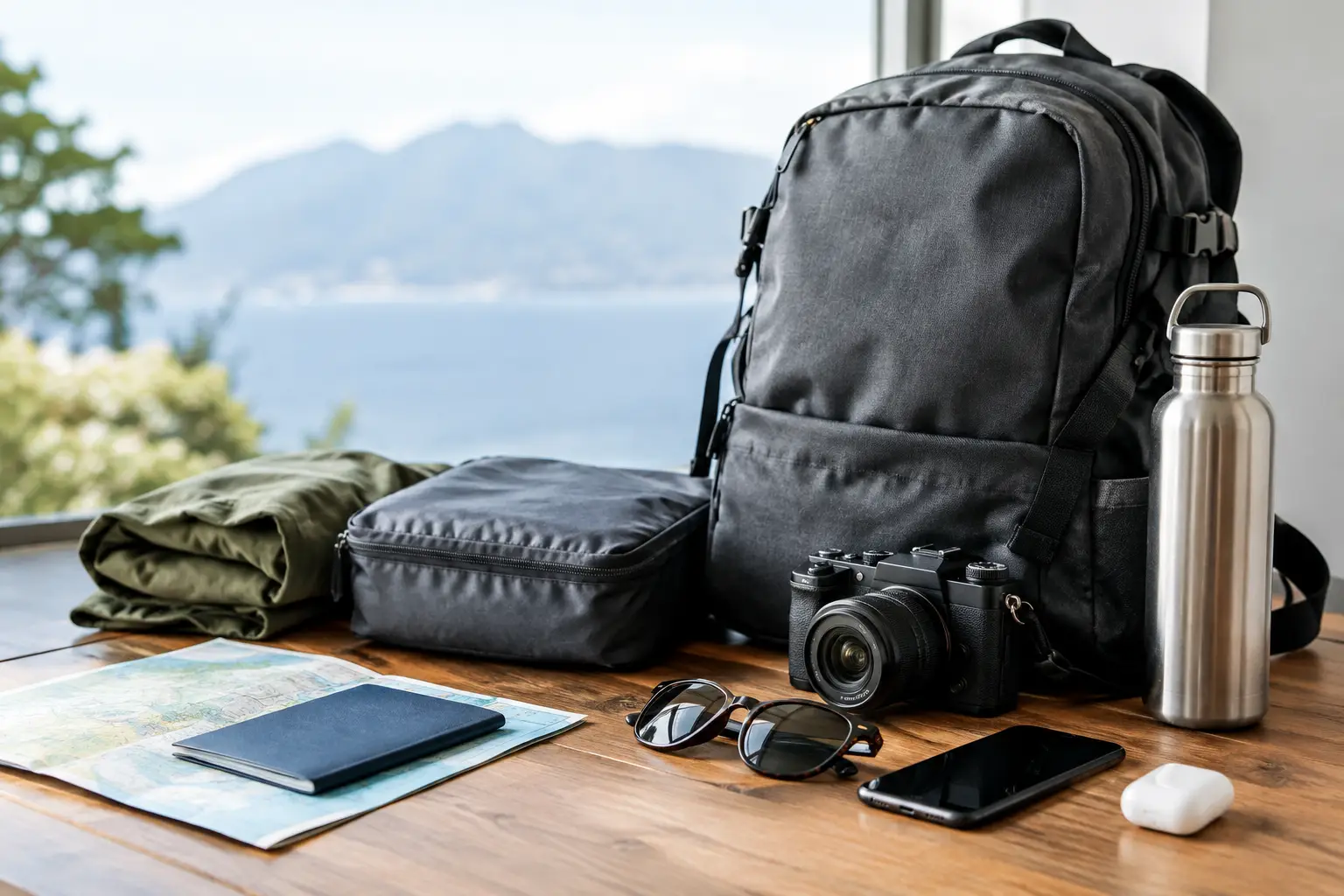
A power bank is another near-essential, particularly when you use your phone for boarding passes, maps, translation, restaurant research and photos. Choose enough capacity for at least one full charge, but remember that larger batteries are heavier and airline rules apply to lithium batteries. Keep it in your cabin bag, not checked luggage.
A reusable water bottle helps in airports after security, on long rail days and in places where buying bottled water is unavoidable otherwise. It does not need to be enormous. A lightweight bottle that fits in a side pocket is more likely to come with you than a fashionable insulated flask that eats half your bag.
Noise-cancelling headphones can be a genuine quality-of-life upgrade if you fly often, take overnight transport or stay in noisy dorms. Yet they are not essential for everyone. Basic earplugs take up no room, cost far less and can be the better answer if your main concern is sleeping rather than listening to podcasts at 35,000 feet.
A small cross-body bag or sling is useful for passport, phone, bank card and other daily essentials, especially in busy city centres. It is not a magic anti-theft device. Keep it zipped, wear it in front in crowded places and do not leave it hanging off the back of a café chair. The most secure bag in the world cannot compensate for switching off completely because you are admiring the view.
Clothing Is Travel Gear Too
The least exciting packing advice is often the most effective: take clothes that work together. A few layers in colours that mix easily will serve you better than a different outfit for every day. You will have less to carry, less to wash and fewer decisions to make when you are tired.
Prioritise comfortable walking shoes you have already worn in. New trainers can look great in departure photos and destroy a trip by the second afternoon. If your plans involve a smart restaurant, a hike and a beach, accept that one pair will not do every job perfectly. Choose based on what you will do most, then make one sensible compromise.
A lightweight waterproof layer is more useful than an umbrella in many places because it leaves your hands free and packs smaller. In hotter climates, breathable fabrics and sun protection deserve more suitcase space than extra evening outfits. In cooler climates, thin layers usually beat one huge jumper because they adapt to changing temperatures.
Do not underestimate a simple laundry plan. A universal sink plug, a little detergent and quick-drying underwear can reduce how much you pack for a longer trip. It is not glamorous, but neither is paying for checked baggage because you packed 14 days of clothes for a 14-day itinerary.
Don’t Buy Security Theatre
Some travel gear exists mainly to make us feel prepared. That feeling can be valuable, but it is different from being prepared.
A money belt can help if it makes you less likely to flash your cash around, but it is awkward for daily payments and can be obvious under fitted clothing. A hotel-door alarm may reassure solo travellers, though checking reviews, choosing a well-located property and trusting your instincts matter more. A huge first-aid kit sounds responsible until you realise it contains items you do not know how to use.
Carry basic medication you personally need, pain relief you tolerate, plasters for blisters and any prescription documents required for your destination. Check rules before taking medicines abroad, particularly for controlled medication. Travel insurance is also more useful than a bag full of emergency gadgets, but read the policy rather than assuming every activity or misplaced phone is covered.
Test your kit at home
The easiest way to spot pointless purchases is to use them before a trip. Pack your bag, walk around the block, charge your phone from the power bank and practise fitting your liquids into the required clear bag. If a jacket will not fit over the layers you plan to wear, or a padlock feels fiddly in your kitchen, it will not improve at midnight in a hostel corridor.
For first-time solo travellers, this rehearsal does something else: it removes a bit of the pre-trip panic. You do not need to be naturally fearless to travel independently. You need systems that reduce the number of decisions you have to make when you are tired or somewhere unfamiliar.
A Smarter Way to Build Your Kit
Buy travel gear slowly, after trips expose a real gap. Maybe your current bag hurt your shoulders. Maybe you spent too much time untangling cables. Maybe a rainy weekend showed that your shoes are not remotely weatherproof. Those are useful lessons, and they point towards purchases that will earn their keep.
Avoid buying a full matching set just because it looks organised online. The best setup is often a slightly mismatched collection built over time: the bag you trust, the charger that works in several countries, the jacket that has survived three soggy city breaks and the shoes that let you keep walking when everyone else is hunting for a taxi.
Pack for the trip you are actually taking, not the fantasy version where you hike at sunrise, attend a rooftop dinner every night and somehow never need a clean T-shirt. Leave a little room in your bag, protect the essentials and let the rest of your holiday be about where you are going rather than what you carried there.