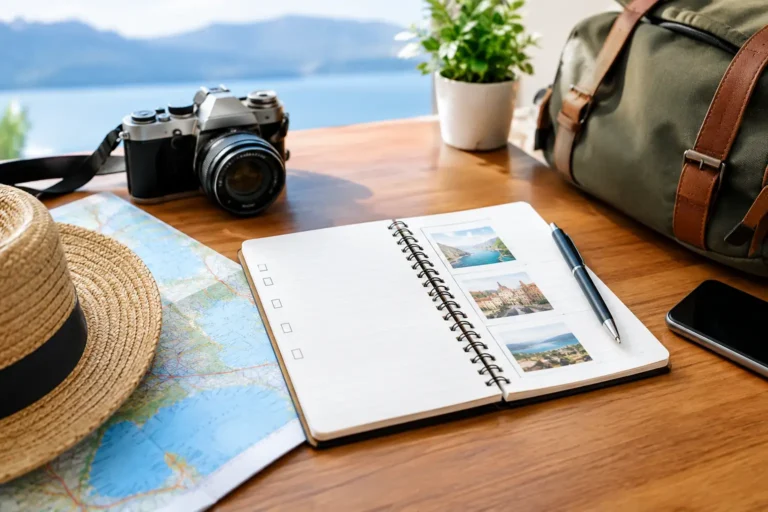

How to Plan a Couples Road Trip Without Rows
A good couples road trip is not about proving you can spend 12 hours in a car without speaking. It is about making the journey part of the holiday, with enough room for the detours, decent food and the occasional change of plan that you will actually remember. Get the basics wrong, though, and a scenic drive can turn into an argument about petrol, parking and why nobody booked anywhere to sleep.
The fix is not a military-grade itinerary. It is agreeing on a few decisions before you leave, then leaving enough slack to enjoy the bits you did not plan.
Start your couples road trip with an honest conversation
Before choosing a route, talk about what each of you wants from the trip. One person may picture wild swimming, mountain roads and cheap campsites. The other may be imagining coastal pubs, a comfortable bed and no more than three hours behind the wheel. Neither is wrong, but those are very different holidays.
Agree your non-negotiables first. That might be one special hotel night, a national park hike, two slow mornings, a festival stop or a realistic total budget. Then decide what is flexible. This avoids the classic problem of one partner planning a packed adventure while the other thought they were going away to relax.
It also helps to be frank about driving. If only one of you is happy on narrow lanes, in unfamiliar cities or after dark, build the route around that. Saying “we’ll work it out” is fine until you are hunting for a campsite at 9pm in sideways rain.
Pick a route that leaves room to breathe
The most common road trip planning mistake is treating Google Maps’ driving time as the whole day. It is not. Add fuel stops, loo breaks, coffee, supermarket runs, traffic, finding parking, walking to viewpoints and the inevitable moment when you spot a farm shop or beach you want to stop at.
For a relaxed trip, aim for two to four hours of driving on most days. You can stretch that for one big transfer day, but do not make every day a transfer day. The best routes have a rhythm: drive, explore, sleep, repeat. If you are changing accommodation every night, you may spend more time packing the boot than enjoying the destination.
A useful compromise is to choose two or three bases rather than ticking off six places. In the UK, this works brilliantly for the North Coast 500, the Lake District, Snowdonia, Cornwall, the Peak District or a Welsh coastal loop. In Europe, it makes more sense to explore a region well than race between capital cities.
When plotting your route, give each day one main thing to do. A hike, a vineyard visit, a coastal walk, a museum or a food market is enough. Anything else is a bonus. Holidays feel better when a missed stop is not treated as a failure.
Build in an arrival-day win
Your first evening sets the tone. Avoid beginning with a late arrival, a complicated key collection and a long search for dinner. Book somewhere straightforward, know where you will park and have one easy meal plan. Even fish and chips on a harbour wall counts as a strong start if neither of you is stressed.
Set a budget that does not become a running argument
Couples do not need to earn the same amount or spend in exactly the same way to travel well together. They do need clarity. The awkwardness usually comes from assumptions: one person thinks meals out are part of the fun, while the other is quietly worried about the bill.
Work out a rough trip pot before booking. Include vehicle hire or fuel, accommodation, tolls or ferries, parking, food, activities, travel insurance and a contingency fund. Parking and fuel are particularly easy to underestimate on a driving holiday, especially in popular coastal towns and national parks.
Decide whether you will split everything equally, pay proportionally to income, or alternate costs. There is no universally fair method. The fair method is the one you both understand and can afford without resentment.
For savings that do not make the trip feel cheap, mix supermarket breakfasts and picnic lunches with a few meals you genuinely care about. Book self-catering stays for part of the route, carry a reusable water bottle and coffee flask, and check parking rules before arriving. Spending £18 on a car park because you had no other option is not a holiday highlight.
Not sure how to organise your travel money? The Travel Money Guide for UK Travellers can help you prepare before you go. Take a look if you’d like more guidance on managing money for your next trip.
Share the admin, not just the passenger seat
One person often becomes the unpaid trip manager: researching stays, checking driving rules, saving locations, sorting documents and deciding where to eat. That arrangement can work if they enjoy it, but it needs to be acknowledged. Planning fatigue is real, particularly when the other person asks, “So what’s the plan?” every two hours.
Split jobs according to strengths. One of you can handle accommodation and the other maps, parking and activities. Or take turns choosing a stop each day. Keep essential information in one shared note: booking references, addresses, check-in times, insurance details, roadside assistance information and a basic route plan.
Download offline maps before you go. Signal drops at exactly the point a sat-nav starts sending you through a muddy lane, and overseas data can be expensive depending on your plan. A phone mount and charging cable are small purchases that prevent disproportionate irritation.
If you are hiring a car, check the excess, fuel policy, mileage limit and whether both drivers are named on the agreement. A bargain rental becomes less of a bargain if the second driver is not insured or you are charged heavily for returning it without a full tank.
Make the car a place you can both tolerate
You do not need matching playlists or a constant stream of meaningful conversation. You do need to agree on the small things that become big things after several hours in a confined space.
Talk about music, podcasts, temperature, snack rules and navigation before annoyance builds. If one person gets carsick, gets hungry quickly or needs frequent breaks, treat that as trip information rather than a personal flaw. A ten-minute stop is usually cheaper than an hour of bad moods.
Keep the front area clear and pack the useful items where you can reach them: water, snacks, tissues, sunglasses, chargers, medication, a light waterproof and a layer for chilly viewpoints. Put overnight bags near the top of the boot if you are moving around, rather than unpacking half your luggage at every stop.
Most importantly, do not force constant togetherness. At a campsite, hotel or cottage, it is completely normal for one of you to read while the other takes a walk, edits photos or has a nap. Space is not a sign the holiday is going badly. It is often why it keeps going well.
Expect friction and handle it early
Road trips put normal relationship habits under a magnifying glass. Someone runs late. Someone has strong feelings about the correct turn-off. Someone is tired, hungry and suddenly convinced the entire route was a mistake.
When tension appears, solve the immediate problem first. Pull over safely, get food, find a toilet, check the booking or take ten minutes apart. Avoid trying to settle wider relationship grievances while one of you is driving through an unfamiliar city centre.
A useful rule is that either person can call for a reset without having to defend it. That might mean skipping an attraction, booking a last-minute room closer by, or choosing the easy restaurant rather than the highly rated one with a 90-minute wait. Flexibility costs less than stubbornness.
Leave room for the bits you cannot pre-book
The route matters, but the best memories are often unplanned: a bakery in a village you had not heard of, a quiet beach reached down a signed footpath, a pub recommendation from a local, or an unexpectedly good view from a lay-by. Planning creates the conditions for those moments. It should not squeeze them out.
Choose your anchors, protect your budget, take turns making decisions and accept that the odd wrong turn is part of the story. A couples road trip works when both of you feel like you are on the same side of the journey, even when the sat-nav clearly is not.