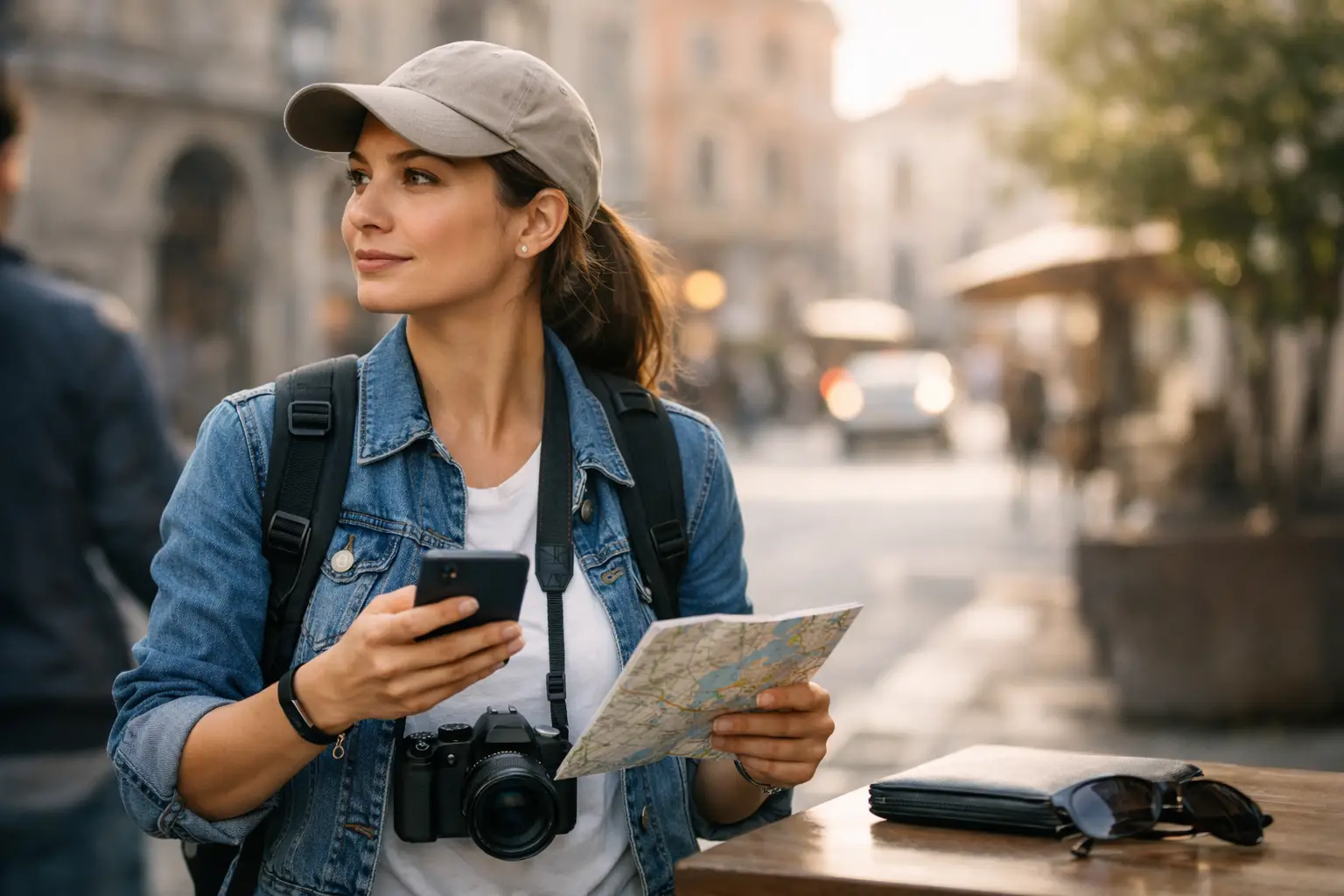
Solo Female Travel Safety Tips That Work
The best solo female travel safety tips do not ask you to be scared, hyper-vigilant or permanently glued to your phone. They help you avoid preventable faff, keep options open when plans change and deal calmly with the odd moment that feels off. Solo travel should make your world bigger, not shrink your route to a hotel, hostel and an early night.
There is no perfectly safe destination, just as there is no single rule that works in a busy European city, a remote hiking trail and a late-night arrival in a country you have never visited. The useful approach is practical: research the situations most likely to catch you out, spend a little where it buys genuine peace of mind, and give yourself permission to change course without feeling rude or dramatic.
Solo Female Travel Safety Tips Before You Go
Good safety starts before you have packed a bag. Read recent traveller reports with a specific eye for arrival logistics, neighbourhoods, common scams, local transport and attitudes towards women travelling alone. Broad safety rankings can be a starting point, but they will not tell you whether the walk from a particular station is poorly lit or whether taxis at an airport have a reputation for overcharging.
Book your first night somewhere with consistently strong, recent reviews. This is not the moment to save £12 by choosing the place with no photos, a vague address and reviews from 2019. Look for comments on the street, door locks, reception hours, luggage storage and whether staff help with transport. A sociable hostel can be brilliant if you want company, while a private room in a small hotel may be worth it after a long flight. It depends on your budget and energy, not a badge of travel toughness.
Arriving in daylight is useful where possible, particularly when you are new to solo travel or landing somewhere with limited transport. But flight times do not always cooperate. If you arrive late, decide in advance how you will get to your accommodation, what it should cost and where you will wait if your ride is delayed. Screenshot the address in the local language, save an offline map and carry enough local cash for a backup journey.
Tell one person your basic plan, including accommodation details and any longer journeys. You do not need to broadcast your every move to family group chats. A simple message when you arrive, plus a check-in after a hike or overnight transfer, is enough. Keep copies of your passport, insurance details, cards and bookings separately from the originals, both offline and in a secure digital location.
Sort your money and phone setup
A dead mobile phone is mostly annoying until it is 11pm and you cannot find your accommodation. Bring a power bank, a charging cable that stays in your day bag and an adaptor that actually fits your destination. Download maps, translation tools and key booking details before leaving Wi-Fi. If your mobile phone supports it, an eSIM or local SIM makes navigation and ride booking far easier.
Do not carry all your cards and cash together. Keep a small amount accessible for daily spending, and put a backup card somewhere separate. Set up bank notifications so you spot unexpected transactions quickly. Travel insurance is not glamorous, but medical treatment, stolen electronics and disrupted journeys get expensive fast. Check the excess, activity cover and medical limits rather than assuming the cheapest policy handles everything.
Choose Confidence Over Performing Confidence
You do not need to look fearless. You need to look like someone who knows what they are doing, or at least knows how to get help. Walk with purpose, check directions before you leave a café rather than standing on a corner with your bag open, and avoid advertising expensive kit. That is sensible travel behaviour for anyone.
At the same time, do not turn “looking confident” into pressure to ignore your instincts. If a person is too persistent, a street suddenly feels wrong, or a driver takes an unexpected route, act early. Step into a busy shop or hotel, call someone, get out at a public place or cancel the plan. You are not obliged to be pleasant to somebody who is making you uncomfortable.
A useful line is: “No, thank you. I’m meeting someone.” It is quick, familiar and does not invite debate. You do not have to explain that you are travelling alone, where you are staying or what you are doing tomorrow. Small lies can be practical privacy, not paranoia.
Meet people without handing over your whole itinerary
One of the joys of travelling alone is that strangers become dinner companions, hiking mates and the person who tells you where the good bakery is. Most people you meet will be perfectly decent. The trade-off is that new friendships need a little structure at first.
Meet in public places, arrange your own transport home and avoid sharing your room number or accommodation address immediately. If a group from the hostel heads out, take your own card, charged mobile phone and enough money to leave independently. Drinking is a personal choice, but know your limit in an unfamiliar setting and keep an eye on your drink. The point is not to spoil the night. It is to ensure a good evening does not depend on a near-stranger making good decisions for you.
Getting Around Without Guesswork
Transport is where travel plans most often become stressful: the delayed train, the taxi rank with no visible pricing, the night bus that drops you somewhere unfamiliar. Reduce the uncertainty before you set off. Check the official route where possible, understand how tickets work and save the name of your stop.
For taxis, use a reputable booking app or ask accommodation staff which local operator is reliable. Confirm the vehicle registration and driver name where an app provides them. If you take a street taxi, agree the fare or make sure the meter is on before moving. Sit in the back when travelling alone, particularly if that is normal locally, and follow the route on your map without making a theatrical show of it.
On public transport, choose carriages with other passengers and avoid empty platforms or bus stops if an alternative is available. That does not mean you must never travel after dark. Plenty of women do so safely every day. It means considering whether a £10 cab is a smarter choice than a 35-minute walk through an unfamiliar industrial area after midnight.
If you hire a car, inspect it before leaving, keep fuel above the point where every station feels urgent and avoid announcing to strangers that you are on your own. On a road trip, share your rough route with someone and do not push through exhaustion just to reach the next scenic stop. Tired driving is a more likely danger than most dramatic travel fears.
Protect Your Space at Your Accommodation
When you check in, notice how entry works. Does the main door lock? Is there a staffed reception or a number to call overnight? In a hostel, use the locker even if your roommates seem lovely, and sleep with your valuables secured rather than loose on a bedside table. A basic door wedge can offer extra reassurance in some rooms, though it is not a replacement for choosing accommodation with proper security.
Do not say your room number out loud at reception if you can avoid it, and ask staff to write it down. If someone follows you into a building or makes you uneasy in a corridor, return to reception or move towards other guests. You are allowed to ask for a room change. You are also allowed to leave and book elsewhere if the place feels fundamentally wrong. Losing one night’s accommodation is frustrating; staying somewhere that has you on edge is rarely worth the saving.
Trust Your Instincts, Then Make a Plan
Instinct is not magic. It is often your brain clocking details before you can name them: a driver who will not confirm the destination, a stranger who ignores a clear no, a bar where staff are dismissive when you ask for help. Listen to that signal, then do something concrete. Move towards people, contact your accommodation, find a police station or call local emergency services if you are in immediate danger.
Save emergency numbers for your destination before you go, and learn a few words for help, police, hospital and taxi if language may be a barrier. If something does happen, prioritise getting somewhere safe over protecting possessions or worrying about whether you are overreacting. Report stolen cards promptly, preserve evidence where relevant and contact your insurer and embassy or consulate if you need support.
Being prepared does not mean every minute must be planned. Leave room for the restaurant recommendation, the last-minute museum visit and the train you take simply because the view looks good. The aim is to build enough practical safety into the trip that you can say yes to the interesting bits with your head clear – which is the whole point of going alone.