
Travel Backpacks: How to Choose One That Works
You notice a bad backpack at the worst possible moment: halfway up a hostel staircase, in the rain outside a railway station, or when the check-in desk says your bag is too big for the cabin. Good travel backpacks do not need to look tactical or cost a small fortune. They need to fit your body, suit the way you actually travel and stop your belongings becoming a sweaty, tangled mess by day three.
That sounds obvious, but the luggage aisle is full of misleading promises. Bigger is not automatically better. More pockets are not always useful. And a stylish roll-top that looks great in airport photos can be deeply irritating when you need your charger, passport or clean T-shirt quickly.
Start with the trip, not the backpack
Before comparing brands, be honest about your itinerary. A backpack for a long weekend in Lisbon has a different job from one for three months around South-East Asia. So does a bag for a couple hiring a car compared with one for a solo traveller catching night buses and budget flights.
For most people taking city breaks or travelling with cabin luggage only, 30 to 40 litres is the sensible sweet spot. It forces you to pack with a bit of discipline, fits the reality of low-cost airline limits more often, and is less miserable to carry through crowded streets. It is enough space for a week or two in warm weather if you are willing to do laundry.
A 40 to 50-litre pack can work for longer multi-stop trips, cooler climates and travellers carrying hiking layers or camera gear. Check the airline’s exact dimensions, though. A bag marketed as carry-on compatible may be too tall once it is stuffed full, and budget airlines are not famous for flexibility at the gate.
Bags over 55 litres make sense for specialist trips, camping gear or extended travel where you genuinely need bulk. For ordinary backpacking, they often encourage the classic mistake: filling every spare inch with things you will not use. You do not need five outfits for hypothetical dinners. You need clothes that can be reworn, a light layer and enough room to repack without sitting on the zip.
The fit matters more than the logo
The best-looking backpack is a poor buy if the weight hangs from your shoulders. A proper travel pack should transfer much of the load to your hips, particularly once you are carrying more than a laptop, water bottle and a spare jumper.
Look for an adjustable back system if you are short, tall or simply unsure about sizing. The hip belt should sit around the top of your hips, not your waist, and it should tighten comfortably without digging in. Shoulder straps need to curve around your body rather than pull backwards. A sternum strap is useful for stabilising a heavier load, but it cannot fix a backpack that is the wrong length.
If possible, try it on with weight inside. Shops sometimes provide weighted bags, but a few water bottles will tell you plenty. Walk around for ten minutes. Reach up. Bend down as if you are getting something from a station locker. If it already feels awkward, it will feel worse after a delayed flight and a long transfer.
Women-specific travel backpacks can be worth trying because they often use shorter back lengths and differently shaped shoulder straps. That does not mean every woman needs one, or that a unisex bag cannot fit brilliantly. Treat the label as a starting point, not a rule.
Ventilation versus convenience
A suspended mesh back panel can reduce the sweaty-back problem in hot places, and that is not a minor comfort issue when you are walking across Athens or Bangkok in summer. The trade-off is that these frames can push the load away from your centre of gravity and make the bag less tidy for cabin travel.
For urban trips, a closer-fitting padded back is often easier to manage. For long hikes or humid destinations where you will walk for hours, better ventilation may be worth the slightly bulkier profile.
Front opening beats top loading for most trips
Top-loading packs are excellent for trekking: pack carefully once, carry for miles, repeat. They are less brilliant in a hostel dorm when the one thing you need is at the bottom and everyone else is asleep.
For general travel, choose a backpack that opens like a suitcase, with a large front or panel zip. You can see everything at once, use packing cubes properly and avoid turning your bed into a clothing explosion. A clamshell opening is especially handy if you move accommodation every few nights.
That said, inspect the zip quality and the way the bag holds its shape. A wide opening is no use if the fabric flops everywhere while you pack. Compression straps help here, but they should not block access to the main compartment every time you want a clean pair of socks.
Pockets that earn their place
More compartments can create more faff. What you actually need is straightforward: a secure place for travel documents and valuables, a quick-access pocket for things used in transit, and a padded laptop sleeve if you are bringing tech.
An external water-bottle pocket is useful, although it needs to be deep enough that your bottle will not launch itself onto a pavement. A separate shoe or laundry section is handy for longer trips, but it steals space from the main compartment. For a weekend away, a lightweight bag for dirty clothes does the same job without dictating the backpack’s layout.
Be cautious with hidden pockets as a main security plan. They are helpful for storing a backup bank card or emergency cash, but pickpocketing prevention is mostly about behaviour: keep your bag close in crowds, do not leave it unattended, and know where your passport is before you need it.
Cabin rules can catch you out
Airline baggage allowances are a moving target. Some fares include a small bag that fits under the seat, while others allow a larger cabin case only if you have paid for priority boarding. The word “carry-on” on a product page does not override the fare you booked.
Measure a packed backpack, not an empty one. Soft bags expand, especially at the top, and dangling straps can make them harder to squeeze into a baggage sizer. Packs with stowaway shoulder straps are useful if you occasionally check them in, since loose webbing is easily caught on airport conveyor belts.
For low-cost flights, a smaller 25 to 30-litre pack can be the cheaper move. It may feel restrictive, but avoiding repeated cabin-bag charges across several flights can leave more money for food, activities and the occasional taxi when your feet have had enough.
Do not confuse heavy fabric with quality
Durable materials matter, particularly if you travel often or take buses, ferries and shared minivans where bags get thrown around. But a heavy, overbuilt backpack adds weight before you have packed a single thing.
Look for reinforced areas around the base, reliable zips, tidy stitching and fabric that can cope with a shower. Fully waterproof backpacks are rarely necessary for ordinary travel. They can be stiff, expensive and awkward to access. A pack cover or waterproof liner is usually more practical, especially if your main concern is protecting electronics and spare clothes.
Security features deserve the same realistic view. Lockable zips can discourage opportunistic rummaging in a dorm or on an overnight train, but they are not a substitute for keeping valuables with you. A small cross-body bag or pouch for your passport, phone and bank cards is often more useful than trying to make your entire backpack theft-proof.
Pack for the bag you own
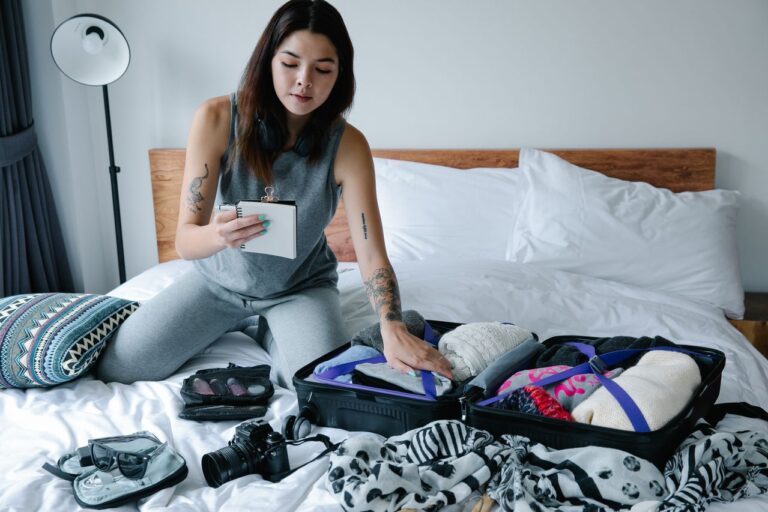
Once you have chosen a size, practise packing before departure. Put heavier items close to your back and around mid-height, not swinging at the bottom. Keep liquids and a change of clothes accessible for travel days. Roll or fold clothes in a way that makes sense to you, rather than following packing hacks that save two centimetres but take twenty minutes to maintain.
The goal is not to become the person with the most efficient bag in the airport. It is to arrive somewhere new with enough energy left to find dinner, check in calmly and start enjoying the place. Buy the travel backpack that makes that easier, then leave a little space inside for whatever the trip gives you.