
Choosing the Right Travel Camera for Your Adventures
Smartphone cameras have gotten remarkably good, which raises a legitimate question for a lot of travelers: is a dedicated camera even worth carrying anymore? The honest answer depends heavily on what kind of photos you’re after and how much you’re willing to carry, but for travelers who want more control and better results in challenging conditions, a dedicated camera still earns its place in the bag.
When a Smartphone Is Genuinely Enough
For travelers mostly interested in documenting a trip for social media or personal memories, modern smartphone cameras handle the vast majority of typical travel scenarios extremely well, particularly in good lighting. Computational photography features, portrait modes, and increasingly capable low-light performance have closed much of the gap that used to clearly favor dedicated cameras. If weight and simplicity matter more to you than maximum image quality or creative control, it’s entirely reasonable to travel with just your phone and skip a separate camera altogether.
Compact Point-and-Shoot Cameras
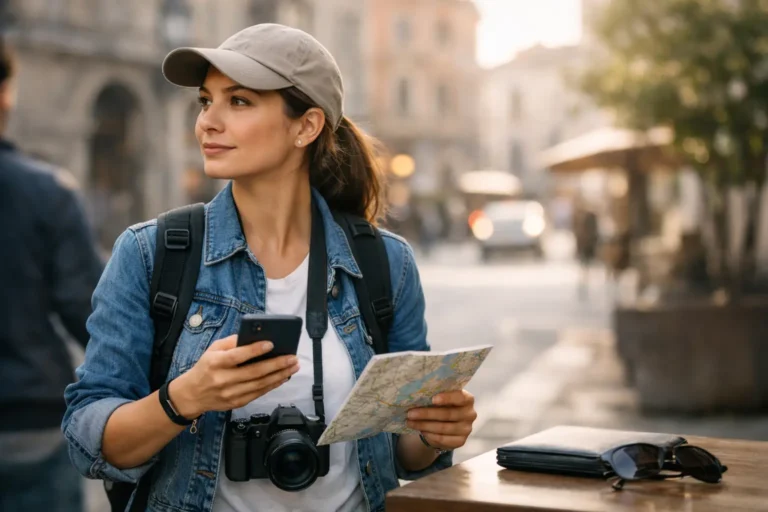
For travelers wanting noticeably better image quality than a smartphone without the bulk of an interchangeable lens system, a high-quality compact camera with a larger sensor than a phone, paired with a versatile built-in zoom lens, is often the sweet spot. These cameras fit in a jacket pocket, require no lens changes or extra accessories, and deliver meaningfully better performance in low light and with background blur than phone cameras, at a fraction of the bulk of a full mirrorless system.
Mirrorless Cameras for Serious Enthusiasts
Travelers who want genuine creative control, the ability to change lenses for different situations, and the best possible image quality for printing or professional use should look at mirrorless camera systems. These offer a large sensor, interchangeable lenses, and generally excellent video capability, while being noticeably lighter and more compact than older DSLR systems that serious photographers used to default to. The trade-off is more gear to carry, more decisions to make about which lenses to bring, and a steeper learning curve if you’re new to manual camera settings.
Action Cameras for Adventure-Heavy Trips
For trips centered around activities like diving, mountain biking, skiing, or anything involving water, dust, or significant physical movement, a small, ruggedized action camera designed to survive these conditions captures footage that a standard camera or phone simply can’t handle safely. Waterproof housings, wide-angle lenses suited to capturing motion, and mounting systems that attach to helmets, chest straps, or gear make these cameras purpose-built for exactly the situations where a regular camera would be at risk of damage.
What Actually Matters When Choosing
Rather than chasing the highest megapixel count or the most impressive spec sheet, think honestly about how you’ll actually use the camera. Do you shoot mostly landscapes, mostly people, or mostly fast-moving action? Will you be editing photos seriously afterward, which benefits from a camera that shoots in RAW format, or mostly sharing directly from the camera or phone with minimal editing? Answering these questions honestly narrows the field far more effectively than comparing spec sheets across a dozen camera models.
Protecting Your Investment on the Road
Whatever camera you choose, a few accessories protect both the gear and your photos. A padded case or insert that fits inside your existing bag rather than a separate dedicated camera bag keeps things simple, while extra memory cards and a small portable hard drive or cloud backup solution protect against the genuinely heartbreaking scenario of losing a card with irreplaceable trip photos. A basic lens cleaning cloth, kept somewhere easily accessible, also solves the common problem of dust and fingerprints ruining otherwise great shots, particularly in dusty or sandy destinations.
Lens Choices for Travel Photography
For travelers using an interchangeable lens system, a single versatile zoom lens covering a moderate wide-angle to short telephoto range handles the vast majority of travel scenarios, from architecture and landscapes to casual portraits, without needing to carry multiple lenses. Serious enthusiasts sometimes add a small prime lens known for excellent low-light performance for evening and indoor shooting, but for most travelers, resisting the urge to pack an entire lens collection keeps both weight and decision fatigue manageable while still covering nearly every situation you’re likely to encounter.
Battery Life and Backup Power for Cameras
Dedicated cameras, particularly mirrorless models, tend to have shorter battery life than most travelers expect, especially in cold weather, which drains batteries faster than typical use at room temperature. Carrying at least one spare battery, and charging all batteries fully the night before a big shooting day, prevents the frustrating experience of a dead camera during a once-in-a-trip moment like a sunset over a landmark you traveled specifically to see.
Insurance for Camera Equipment
A dedicated camera and lens represent a meaningful financial investment, and standard travel insurance policies sometimes cap electronics coverage at a level well below the actual replacement cost of quality camera gear. Checking your policy’s specific electronics limit, and adding a rider or separate gear insurance policy if needed, is worth the modest additional cost for anyone traveling with equipment they genuinely couldn’t easily afford to replace out of pocket.
Backing Up Photos While You Travel
Losing photos partway through a trip, whether through theft, damage, or simple corruption of a memory card, is one of the more devastating things that can happen to a traveling photographer. Building a simple backup routine, transferring photos to a phone, a small portable hard drive, or a cloud service at the end of each shooting day, means a single lost or damaged card doesn’t erase an entire trip’s worth of images. This habit takes only a few minutes each evening but provides real peace of mind, particularly on longer trips where a card might otherwise accumulate weeks of irreplaceable photos before being backed up anywhere else.