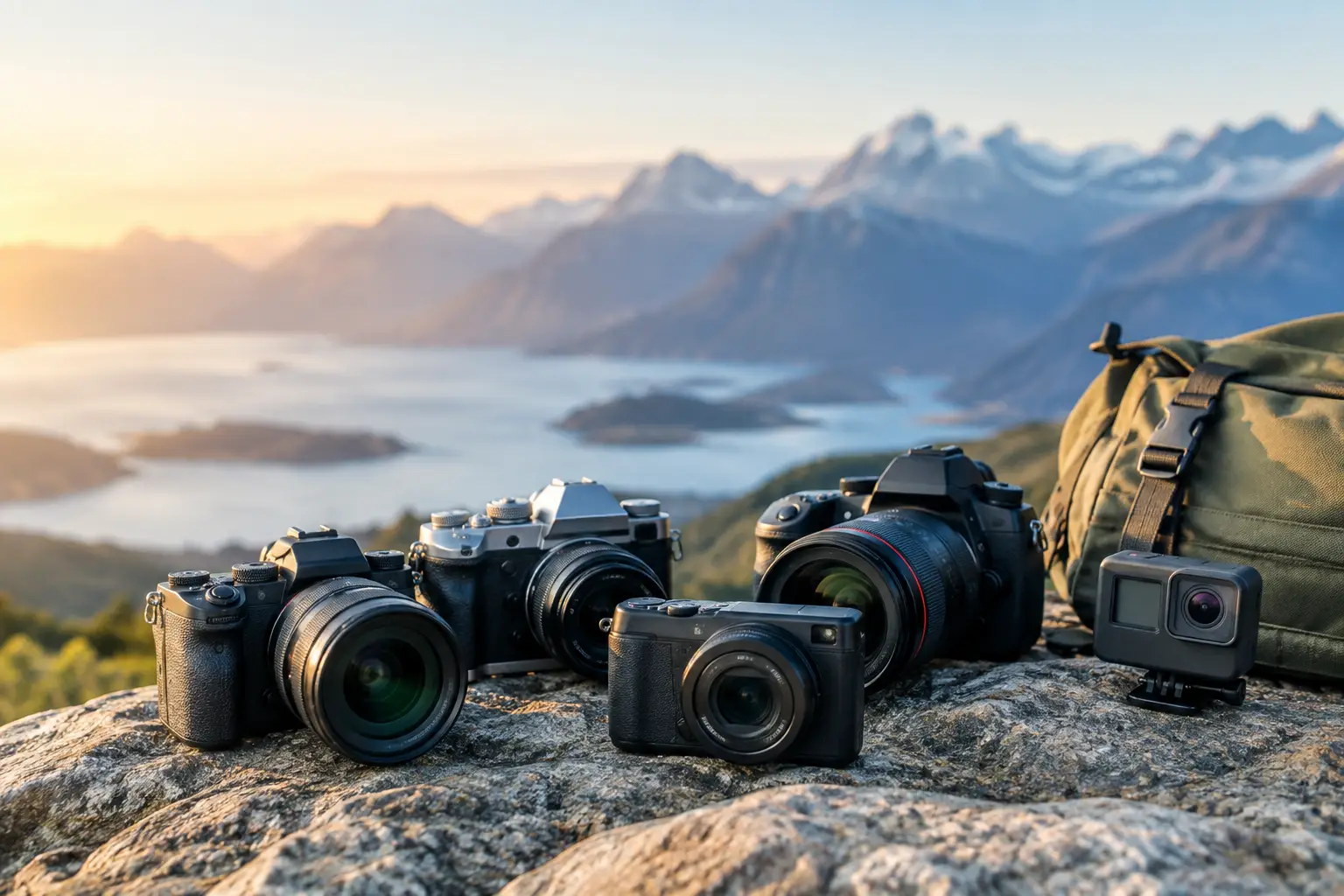
8 Best Cameras for Travel Photography in 2026
A camera can be technically brilliant and still be a terrible travel companion. If it is too heavy for a full day in Lisbon, too precious to take out in a downpour in Skye, or so complicated that you leave it in the hotel safe, it will not improve your holiday photos. The best cameras for travel photography are the ones you will actually carry, understand and enjoy using.
That means there is no single winner for every traveller. A backpacker crossing Southeast Asia needs something very different from a couple on a long weekend in Rome or a hiker who wants to photograph sunrise without hauling a camera bag up a hill. Here are the cameras worth considering, with the compromises spelled out before you spend your money.
1. Fujifilm X100VI: best for city breaks and everyday travel
The Fujifilm X100VI is the camera many travellers want because it makes photography feel like part of the trip rather than a separate job. Its compact body, 40.2-megapixel APS-C sensor and fixed 23mm f/2 lens give you a 35mm equivalent field of view: wide enough for street scenes and food, but natural enough for portraits and travel detail.
The appeal is not just image quality. Fujifilm’s film simulation modes produce pleasing JPEGs straight from the camera, which matters when you would rather be at a tapas bar than editing files on a laptop. In-body image stabilisation also helps in museums, evening markets and dim restaurants.
The catch is obvious: there is no zoom. You need to move your feet, crop occasionally and accept that distant wildlife or mountain details are not its job. It is also often difficult to find at its recommended price. If you love a simple, discreet camera and primarily shoot places, people and atmosphere, it is a superb choice. If you need flexibility, buy an interchangeable-lens model instead.
2. Sony a6700: best all-rounder for ambitious travellers
For travellers who want one camera to handle almost anything, the Sony a6700 is hard to beat. It has a 26-megapixel APS-C sensor, in-body stabilisation, excellent autofocus and access to a huge range of Sony E-mount lenses. It can photograph a fast-moving street scene in Tokyo, then switch to video without feeling out of its depth.
Pair it with a small standard zoom and you have a sensible travel setup. Add a compact prime lens for evenings, or a telephoto for safari and hiking trips, and it grows with your plans. That is its real advantage over a fixed-lens camera.
There is a cost to that flexibility. Once you start adding lenses, chargers and filters, the lightweight setup can become a full camera bag. Sony’s menus can also feel less friendly than Fujifilm’s physical dials. Still, for travellers who want sharp results and do not want to outgrow their camera after one holiday, this is one of the best cameras for travel photography.
3. Canon EOS R8: best affordable full-frame option
The Canon EOS R8 is a strong option if you want the look and low-light performance of a full-frame camera without carrying a large professional body. Its 24.2-megapixel sensor delivers lovely files, particularly in tricky evening light, and Canon’s autofocus is reliable for portraits, street photography and family trips.
It is remarkably light for full frame, which sounds ideal for travel. The complication is the lens choice. Compact RF lenses keep the package manageable, but larger zooms quickly defeat the point. There is also no in-body image stabilisation, so the lens you choose matters more when shooting handheld in low light.
Choose the R8 if you value portraits, night scenes and image quality above all else, and are happy to keep your lens collection modest. It is less convincing for travellers who want a tough, all-weather body or days of shooting away from a charger, as battery life is only average.
4. OM System OM-5 II: best for hiking and bad weather
The OM System OM-5 II makes more sense than most cameras for active trips. Its Micro Four Thirds sensor is smaller than APS-C or full frame, but the body is compact, stabilisation is excellent and weather sealing is a genuine practical benefit when conditions turn wet, dusty or cold.
More importantly, the lenses can stay small. A wide-angle, standard zoom and telephoto kit can fit into a daypack without making you resent every uphill section. The system also offers useful computational modes, including handheld high-resolution shooting, which can be handy for landscapes when your subject is not moving.
The trade-off is lower performance in very poor light and less background blur than larger-sensor cameras can produce. That may matter for night markets or indoor portraits, but it is rarely a deal-breaker for daylight travel, landscapes and wildlife. For walkers, cyclists and people who pack for reality rather than Instagram, it is a clever choice.
5. Ricoh GR III: best pocket camera for serious street photography
The Ricoh GR III is small enough to fit in a jacket pocket and capable enough to produce images that embarrass plenty of bigger cameras. It has a 24-megapixel APS-C sensor and a fixed 28mm-equivalent lens, making it ideal for quick, wide travel photos in crowded streets.
This is a camera for people who value spontaneity. It starts quickly, attracts very little attention and is easy to have ready when the light, person or passing motorbike finally lines up. For solo travellers especially, a camera that does not advertise its price can feel more comfortable in busy places.
But it is a specialist tool. There is no built-in viewfinder, no zoom, modest battery life and no weather sealing. The 28mm view is also wider than some people naturally like. If you find yourself shooting mostly on your phone because carrying a camera feels like a faff, the GR III could be the rare upgrade that genuinely changes your habits.
6. Sony RX100 VII: best premium compact with a zoom
If you want a camera that fits in a pocket but need a useful zoom, the Sony RX100 VII remains a smart buy. Its 24-200mm equivalent lens covers wide city views, portraits and faraway architectural details without requiring a lens change. The autofocus is quick, and the pop-up viewfinder is far more useful in harsh sunshine than it first appears.
Its one-inch sensor cannot match APS-C cameras in low light or for heavy editing, and the lens becomes relatively slow as you zoom in. It is also not cheap for such a small camera. Yet that misses the point: this is the camera you can take into a restaurant, concert venue or day out without planning your outfit around it.
7. Nikon Z50II: best straightforward camera for beginners
The Nikon Z50II is a practical entry point into interchangeable-lens photography. It offers a 20.9-megapixel APS-C sensor, capable autofocus and a simple handling experience that feels less intimidating than many cameras aimed at creators. With Nikon’s compact 16-50mm kit lens, it is a neat setup for city breaks, food, landscapes and family travel.
It lacks in-body stabilisation, and the smaller range of compact DX lenses means you should check your future lens options before buying. But beginners often overestimate how much camera they need. The Z50II gives you room to learn without demanding a large budget or a course in menu systems before departure.
8. Panasonic Lumix S9: best for travel video and social content
The Panasonic Lumix S9 is built for travellers who want strong stills alongside polished video clips. It has a 24.2-megapixel full-frame sensor, good stabilisation and creative colour profiles that can reduce the amount of editing needed between filming and posting.
It is compact for a full-frame camera, but not as self-contained as it looks. There is no electronic viewfinder, and full-frame lenses can be bulky. It also uses an electronic shutter, which will not suit every fast-moving subject. For travellers documenting a road trip, rail journey or longer adventure in both photos and video, though, it offers an appealing balance.
How to choose a travel camera without overspending
Start with the trip you actually take, not the trip you imagine taking. For city breaks, a fixed-lens camera or compact zoom is often more enjoyable than a bag full of kit. For multi-stop trips, hikes or safari, an interchangeable-lens system is worth the extra planning because one body can cover wide landscapes and distant subjects.
Also budget for the boring essentials: a spare battery, a decent memory card, a small protective bag and travel insurance that covers camera equipment. Buying a camera body that stretches your budget, then having no money for a lens or backup battery, is a very common mistake.
Finally, do not dismiss your phone just because you are buying a camera. Use the camera when its sensor, lens, controls or creative process add something. Use your phone when you need a quick map, a boarding pass and one photo of your lunch before it goes cold. The right camera should make you look up more, not make your holiday feel like unpaid production work.