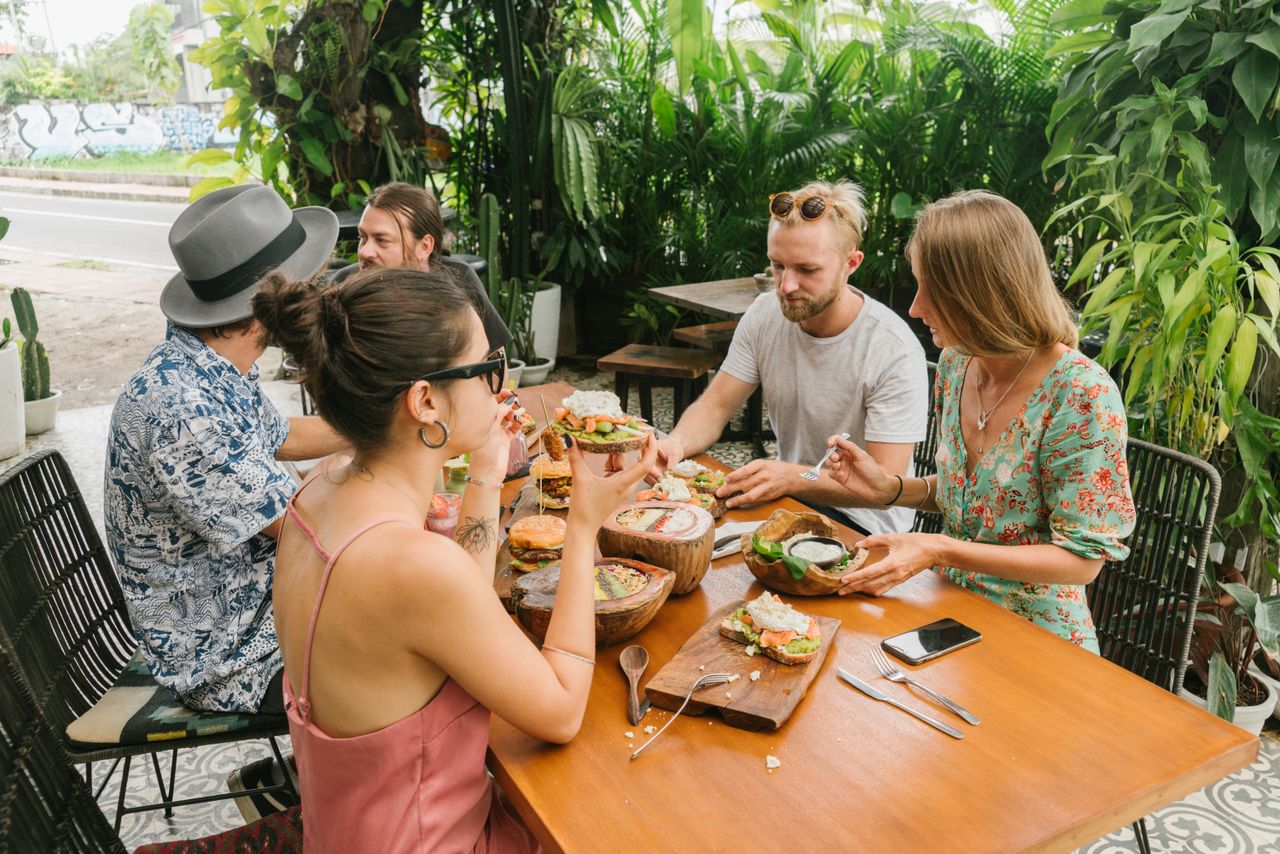
You Don’t Have to Eat Instant Noodles: Eating Cheap on the Road
There’s a stubborn myth that budget travel means surviving on packet noodles and regret. I understand where it comes from food is one of the easiest ways to blow a budget, so the instinct is to cut it to the bone. But here’s what I’ve found after years of eating my way through cheap trips: food is often where budget travel gets better, not worse. The best meals of my life have also been some of the cheapest, and they were never eaten in a restaurant with a queue of tourists outside. Eating cheaply and eating well turn out to be far more compatible than anyone warned me.
Follow the crowd, but the right crowd
The simplest rule I’ve ever learned is to eat where working locals eat. Not tourists, locals. Find the small, unglamorous place packed with people on their lunch break, the one with a short menu and a line of taxi drivers, and you’ve found both the cheapest and usually the best food in the area. Locals won’t overpay for mediocre meals in their own city. Their choices are a free, reliable guide. If a place is full of people who look like they live there, sit down. If it’s full of people holding cameras and menus in your language, keep walking. This one habit alone will transform both your budget and your meals.
Street food is a feature, not a risk
A lot of travellers are scared of street food, and they miss out on the soul of a place because of it. In much of the world, the food cooked in front of you on a cart is fresher and safer than what sits under a heat lamp in a fancier spot. The trick is to watch for two things: a busy stall and a high turnover. If the food is flying out and being cooked to order in front of a crowd, it hasn’t had time to sit around. Some of the most memorable, flavour-packed meals I’ve had cost less than a coffee and were handed to me in a paper wrapper on a busy corner, eaten standing up while the city moved around me.
There’s also something to be said for the theatre of it. Watching someone who has made the same dish ten thousand times work with total economy of motion is its own small pleasure. You’re not just buying food, you’re buying a front-row seat to a craft, and it happens to be the cheapest ticket in town.
Make breakfast your own
Eating out three times a day adds up fast, so I pick one meal to handle myself, and it’s almost always breakfast. A quick trip to a local market or small grocery gets me fruit, bread, and something to spread on it for a fraction of a cafe bill. This isn’t about deprivation it’s about choice. By keeping breakfast simple and cheap, I free up money to eat somewhere memorable at dinner without a second thought. Shared hostel and guesthouse kitchens make this effortless, and there’s something quietly lovely about a homemade breakfast eaten on a balcony in a place you’ve never been, watching a new city wake up.
Learn the market
Local markets are the beating heart of how a place actually eats, and they’re a budget traveller’s best friend. Produce is cheaper and fresher than any shop, you can buy exactly as much as you need, and wandering the stalls is an activity in itself free entertainment that also happens to feed you. Prepared food at markets is often incredible too: a plate of whatever’s being cooked that day, made by someone who’s done it for decades, for pocket change. I plan whole afternoons around markets now, and they never disappoint. You learn what a region actually grows and eats, and you leave with a bag of food and a much better sense of where you are.
Timing saves money
When you eat matters as much as where. Lunch menus are frequently far cheaper than the same food at dinner, so I make lunch my main meal when I can, then keep the evening light and inexpensive. Toward closing time, bakeries and markets often slash prices on what they couldn’t sell, and you can eat beautifully for almost nothing if you show up at the right hour. None of this requires sacrifice. It just requires paying attention to the rhythm of a place, which is half the fun of being somewhere new anyway. Once you learn a city’s mealtime rhythm, you eat better for less without even trying.
Drink like a local
Drinks are a silent budget killer. Bottled water, sodas, and especially alcohol at tourist bars add up shockingly fast. In many countries the tap water is fine and a refillable bottle pays for itself in a day. When it comes to going out, the neighbourhood spots where locals actually drink charge a fraction of what the places with a view charge, and the atmosphere is usually far better anyway. A little awareness here saves a surprising amount over a full trip. The view from the expensive rooftop bar is nice for one drink, but the little place down a side street is where the evening actually gets good.
Learn three words and a dish
Something small but powerful: learn to say hello, thank you, and delicious in the local language, and learn the name of one dish the region is known for. It sounds trivial next to all the practical advice, but it changes how people treat you at the table, and warmth at a food stall often translates into a more generous plate and a fairer price. Walking up to a vendor and asking for their signature dish by name, with a smile and a thank you, marks you as someone who cares rather than someone passing through. I’ve been waved over to try things off the menu, handed extra portions, and pointed toward the truly good places, all because I made the tiny effort to meet people halfway. It costs nothing and pays back in both flavour and money.
You don’t need to be fluent or even good. The effort itself is the point. People everywhere respond to someone genuinely curious about what they eat and how they make it, and that goodwill has a way of showing up on your plate and in your bill.
Why cheap food is better food
Here’s the part that took me years to fully appreciate. The expensive, tourist-facing restaurants are rarely where a country’s best cooking lives. Real food the dishes people grew up on, made the way they’ve always been made tends to be humble and inexpensive by nature. When you eat cheaply and locally, you’re not settling for less. You’re getting closer to the actual place. Budget eating and great eating aren’t opposites at all. More often than not, they’re the exact same thing, and realising that turns every meal on the road into something to look forward to rather than something to ration.
So drop the instant noodles. They were never the price of admission to affordable travel. The corner where the locals queue, the market stall with the long line, the family kitchen with four tables that’s where cheap and delicious meet, and once you start eating there, you’ll never want to go back to the tourist trap with the pretty view and the forgettable food.