Best Carry On Travel Backpack for UK Flights
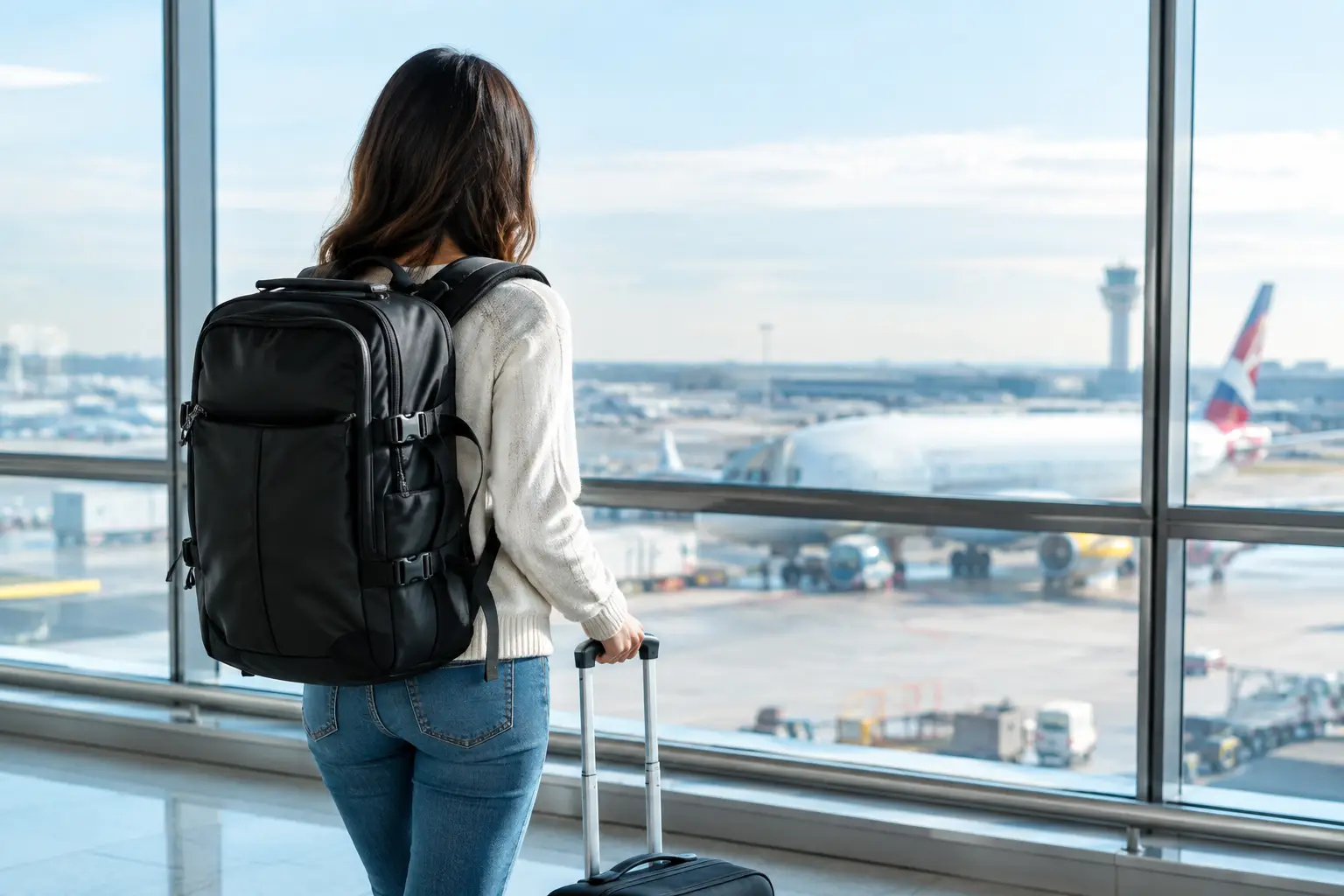
You can ruin a £35 flight bargain with one badly chosen bag. Turn up with a backpack that is two centimetres too deep, or one that bulges after you add a jacket, and the gate fee can cost more than the fare. The best carry on travel backpack is not necessarily the biggest, toughest or most expensive one. It is the one that fits the airlines you actually fly, carries comfortably from station to hostel, and stops your packing from becoming a bin-bag-shaped mess.
For most UK travellers, a clamshell-opening backpack between 30 and 40 litres is the sensible sweet spot. It is enough for a long weekend, a week of warm-weather travel, or much longer if you pack with discipline. But airline rules, your body shape and the kind of trip you take all matter more than a flashy capacity number.
What makes the best carry on travel backpack?
Start with the airline, not the bag. Low-cost carriers are ruthless because oversized luggage fees are an easy source of revenue. Ryanair’s free small bag allowance is particularly restrictive at 40 x 25 x 20cm. easyJet’s free under-seat bag is more generous at 45 x 36 x 20cm. Paid cabin-bag allowances are bigger, but vary by fare, route and airline, so always check before booking.
That means a 40-litre bag can be a brilliant choice for a British Airways city break and completely wrong for a Ryanair weekend when you have only bought the basic fare. It may technically fit a published measurement when empty, then fail the sizer once you have crammed in trainers and souvenirs.
A good travel backpack should open like a suitcase. Top-loading hiking packs are excellent on a trail, but digging through one for a phone charger in an airport lounge is annoying. A full zip opening lets you see every item, use packing cubes properly and repack without sitting on the floor of your hotel room.
Comfort is the next non-negotiable. Look for padded shoulder straps, an adjustable sternum strap and a back panel that does not turn sweaty after a ten-minute walk. A hip belt helps with heavier loads, although on a compact carry-on bag it does not need to be a serious trekking harness. If you are petite, pay close attention to torso length: a bag that looks compact online can still sit awkwardly low on your back.
Finally, judge organisation with some scepticism. A laptop sleeve, passport pocket and small outer compartment are useful. Fifteen tiny pockets are not. They add weight, eat into usable space and encourage you to lose your cable adapter in a compartment you forget exists.
Best carry on travel backpack picks by trip type
There is no single winner because a weekend in Lisbon, a month in Southeast Asia and a work trip to Edinburgh ask different things from your luggage. These are the styles and models worth considering when you want a bag that works beyond the airport carousel.
For low-cost airline weekends: CabinZero Military 28L or 36L
CabinZero has become popular with budget travellers for a simple reason: the bags are light, rectangular and available in sizes that make sense for strict cabin rules. The Military range looks more outdoorsy than the standard Classic range, with better padding and more structured carry.
The 28-litre version is the safer bet when you often fly with only a free personal-item allowance, though you must still check the bag’s dimensions against your airline. The 36-litre model gives you more flexibility for airlines with roomier under-seat limits or when you have paid for cabin baggage.
The trade-off is that these bags are less polished than pricier travel packs. The harness is fine for airport-to-accommodation walking, not ideal for carrying ten kilos across a hilly city all afternoon. Still, for people who would rather spend money on tapas than luggage branding, it is a sensible choice.
For one-bag trips: Osprey Daylite 44+6
The Osprey Daylite 44+6 is a smart answer to a common problem: you want one bag for a short low-cost flight and a larger bag for trips where you have cabin-bag allowance. It has an expandable design, so you can keep it lean when dimensions are tight and use the extra room when rules allow.
It opens suitcase-style, has a useful laptop compartment and benefits from Osprey’s experience in making bags that are genuinely comfortable to carry. It is not the most stylish option, but it is practical in a way that matters when you are changing trains, navigating cobbled streets or arriving at accommodation before check-in.
Do not treat the expansion zip as free packing space. If you expand it for a flight with tight limits, you may be volunteering for a gate-side argument.
For organised city breaks: Patagonia Black Hole MLC 45L
If you mix leisure trips with occasional work travel, the Patagonia Black Hole MLC 45L is worth a look. It has a cleaner, more structured layout than many backpacking bags, with good separation for tech, documents and clothes. It can be carried as a backpack, shoulder bag or briefcase-style bag, which is handy when you do not want to arrive at a meeting looking like you have just left a campsite.
Its main weakness is obvious: 45 litres is too much bag for many free cabin allowances. This is a bag for trips where you have booked a proper cabin case allowance, not a magic workaround for Ryanair. It can also feel boxy on smaller frames when fully loaded.
For adventure-led travel: Cotopaxi Allpa 35L
The Cotopaxi Allpa 35L suits travellers who want to move quickly between cities, surf towns and hostels without babying their luggage. Its tough fabric and suitcase-style internal sections make packing easy, while the shoulder straps are more substantial than those on many fashion-led travel bags.
The divided interior is either a dream or a nuisance. If you like clear zones for clothing, toiletries and kit, it keeps life orderly. If you prefer one large open compartment for awkward items, it may feel restrictive. It is also heavier than ultra-minimal bags, so it makes more sense for multi-stop holidays than for a two-night pub-and-theatre break.
Capacity is where most people get it wrong
A 40-litre backpack does not mean 40 litres of clothes. Your charger, toiletries, water bottle, jacket, book and the bag’s own padding all consume room. The sensible goal is to pack to around 80 per cent of capacity. You leave space for a layer you take off at the airport, a snack for the flight and the inevitable purchase you convince yourself is culturally essential.
For a three-night city break, 28 to 32 litres is usually plenty. Take two bottoms, three tops, underwear, one smarter layer and shoes you can walk in all day. For a week in warm weather, 35 litres works if you will wash a few items in the sink or use a laundrette. A 40-litre-plus bag becomes useful for cold climates, camera equipment or trips combining hiking gear with normal clothes.
Packing cubes help, but they are not a cure for overpacking. Their real value is speed. You can pull out one cube in a hostel dorm, keep dirty clothes separate and avoid emptying the entire bag to find a T-shirt.
Features worth paying for – and ones to skip
The details that genuinely improve a carry-on bag are lockable zip pulls, a padded laptop sleeve, external bottle storage, compression straps and a luggage pass-through if you sometimes take a wheelie case. Water-resistant fabric is useful in Britain and northern Europe, but no backpack should be trusted as fully waterproof in sustained rain. Use a dry bag or a simple rain cover for electronics and documents.
Be wary of built-in USB ports. They sound handy but usually add little value, and you still need to carry a power bank. Over-designed anti-theft features can be similar: a hidden passport pocket is handy, but complicated buckle systems become tedious every time you need a jumper.
Before committing, load the bag with roughly what you would take on a real trip. Walk around the house for ten minutes. Check whether the straps rub your neck, whether the laptop sleeve sits against your back and whether the bag stays balanced. A backpack can have glowing reviews and still be wrong for your shoulders.
The best choice is the bag that makes you pack less, move faster and board without nervously scanning the gate staff for the luggage sizer. Buy for the trips you take most often, not the fantasy expedition you might do one day. Your future self, standing in a drizzle outside Luton with one hand free for a coffee, will be grateful.